
Identity.
In psychology, there’s a term for what happens when identity becomes too narrow or fixed: identity foreclosure.
This describes a state where someone commits deeply (and often unconsciously) to a single identity, without leaving much room for exploration, adaptation, or change. In many high-performance cultures, this is not just encouraged; it’s celebrated.
I lived this in such a visceral way in my whitewater kayaking career… and then I also lived the consequences.
Strong identities can give us structure and drive in life. They really do rhyme with the idea of “Starting with Why” as-described by Simon Sinek. However, when worth is tied to performance, the margin for self-compassion shrinks. And in athletics, we are dealing with human bodies and minds… injury and aging can become existential crises, and comparison feels relentless.
For me, it felt so simple as a teenager… high school, the travails of social life, and traditional sports didn’t feel like home, but the river? The river felt like home. My (undiagnosed at the time) ADHD mind could be directed at this infinitely powerful and dynamic force of Nature that I seemed to understand in a way that virtually noone else could. I could dissect and navigate massive waterfalls, harness the power of a surging river wave to fly into the air and perform tricks, embody calm and grace through chaos, and effectively live my dream.
Operating at my physical peak (a period spanning perhaps eight years) felt like a superpower. I knew my place in the world. I had purpose. I had a tribe. I had external validation that told me, over and over again, that this intoxicating identity was real, worthy and exceptional.
I didn’t just do a thing… I was the thing.
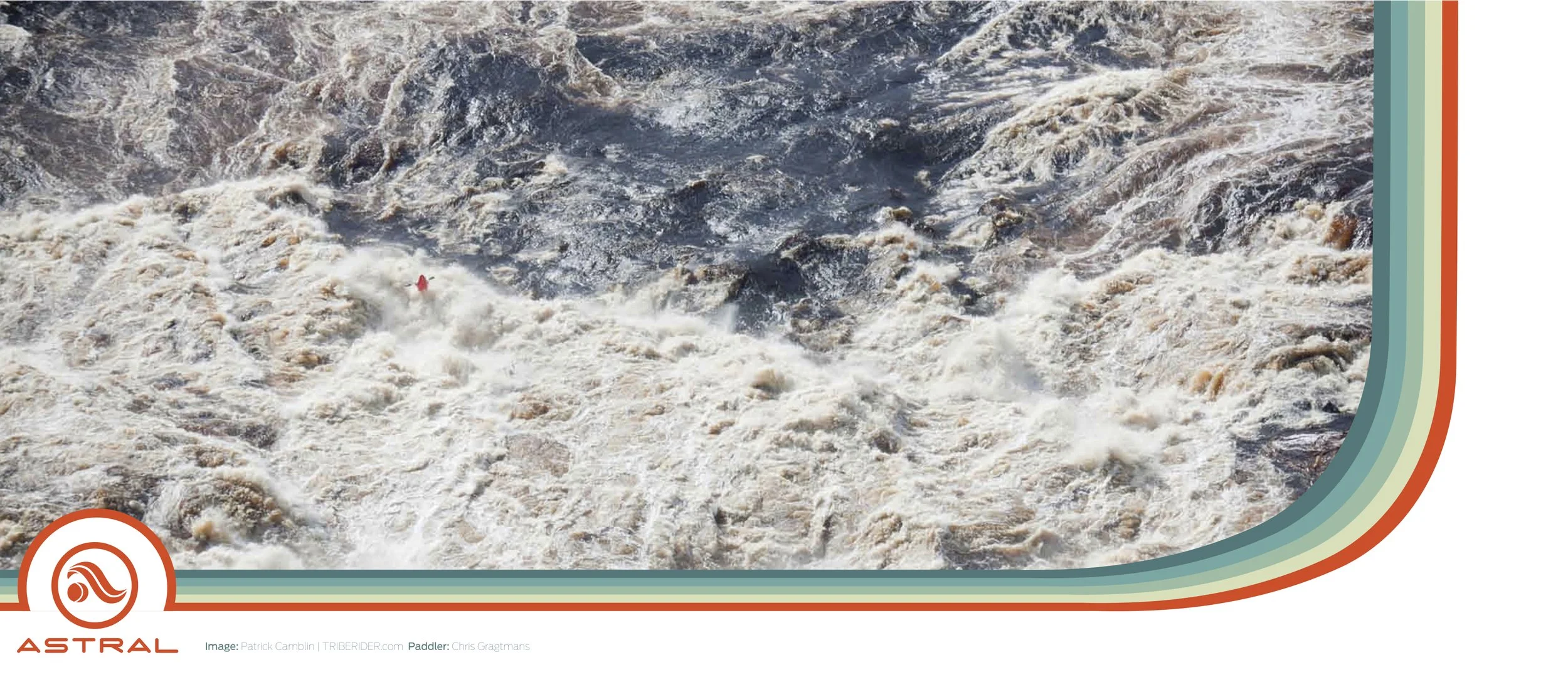
Whitewater Grand Prix, May, 2011. 25 athletes were invited to an all-expenses-paid, six event series in Quebec, Canada to determine the best overall kayaker on Earth. This photo of me (and Aniol Serrasolses - buried in the whitewater), was shot by Patrick Camblin from a helicopter, and I ended up placing 6th overall.
The river was more than mastery and adrenaline… it dissolved me into itself and consumed me. I was playing in Nature. I was Nature. Amidst that elemental flow, the Self went quiet. There was no performance, comparison or inner critic - just immersion in something larger and more pure than I could ever be.
But over time, the ego worked to reclaim those moments. What began as self-transcendence slowly hardened into self-definition. The experience that had always loosened my sense of self became the thing I clung to in order to know who I was. I was the badass pro kayaker. And I started to learn something I wish someone had told me when I was younger: the parts of us that feel the strongest can also be the most fragile. And when we attach our worth to one version of ourselves, anything that threatens it can feel like an existential crisis.
There were years when I would place second at the Green River Narrows Race - an objectively exceptional result - and something almost anyone would be thrilled with. I would go home afterwards, close the door, and cry. Not out of gratitude or humility, but out of disappointment and self-judgement. If I wasn’t winning, I felt like I was failing. I thought it meant that I cared enough, but looking back I can see that it was a warning sign. It wasn’t healthy.
Unfortunately there’s a reason many elite performers experience depression, anxiety, or disorientation. When one’s whole sense of self is built on a single pillar of life, the loss or weakening of that pillar can feel like a kind of death.
This mental health toll is seeing the light of day with awareness being driven in the Olympic athletic community (such as The Weight of Gold documentary, and the efforts of Simone Biles and others)… but it is also present elsewhere in society. Veterans face it when they re-enter civilian life, founders face it when they step away from their companies, parents face it when children leave home. Anyone who builds their sense of self around a single role eventually confronts the same unsettling question:
Who am I when this is no longer who I am?
In my river of life, this identity was a sandbar disguised as bedrock. It felt stable to stand on for a period, but was eventually altered and carried away by the flow of time. Performance and exceptionalism are fleeting, and we can’t tie our worth to them.
I’ve watched some athletes age gracefully… expanding their identities, mentoring others, staying connected without clinging, and not taking themselves too seriously. But sadly others have “fallen off the bandwagon”… disappearing from the community and spiraling into bitterness or self-destruction. It’s difficult to witness, and far more common than we like to admit.
I danced very close to this line at a particular moment in my life… dangerously close.
I dislocated my shoulder in 2014 in competition at the GoPro Mountain Games after training all winter to make one more concerted push at my competitive career. I was mangled and needed surgery. After the operation I was immobilized and things were far from glamorous. I couldn’t eat or shower without help, and was doing endless physical therapy. Something really sad happened… the phone stopped ringing. Not maliciously… friends just didn’t know what to say, or they assumed I’d be back soon. But the quiet was real, and in that quiet something else emerged.
Painkillers.
I remember exactly how fast it worked. I would take a Percocet, and ten minutes later I’d be laughing at a cartoon, completely unbothered. No grief. No anxiety. No identity crisis. Just relief.
That moment scared me… not because it felt bad, but because it felt too good. It was a tangible example of how quickly identity imbalance and isolation can tip someone into a dark current. I was fortunate. I had good mentors* and got off the pills before it became something else, and many people aren’t so lucky.
This is an example of the quiet confluence of identity, mental health, and addiction. When our sense of self collapses and community thins out, the nervous system looks for regulation wherever it can find it.
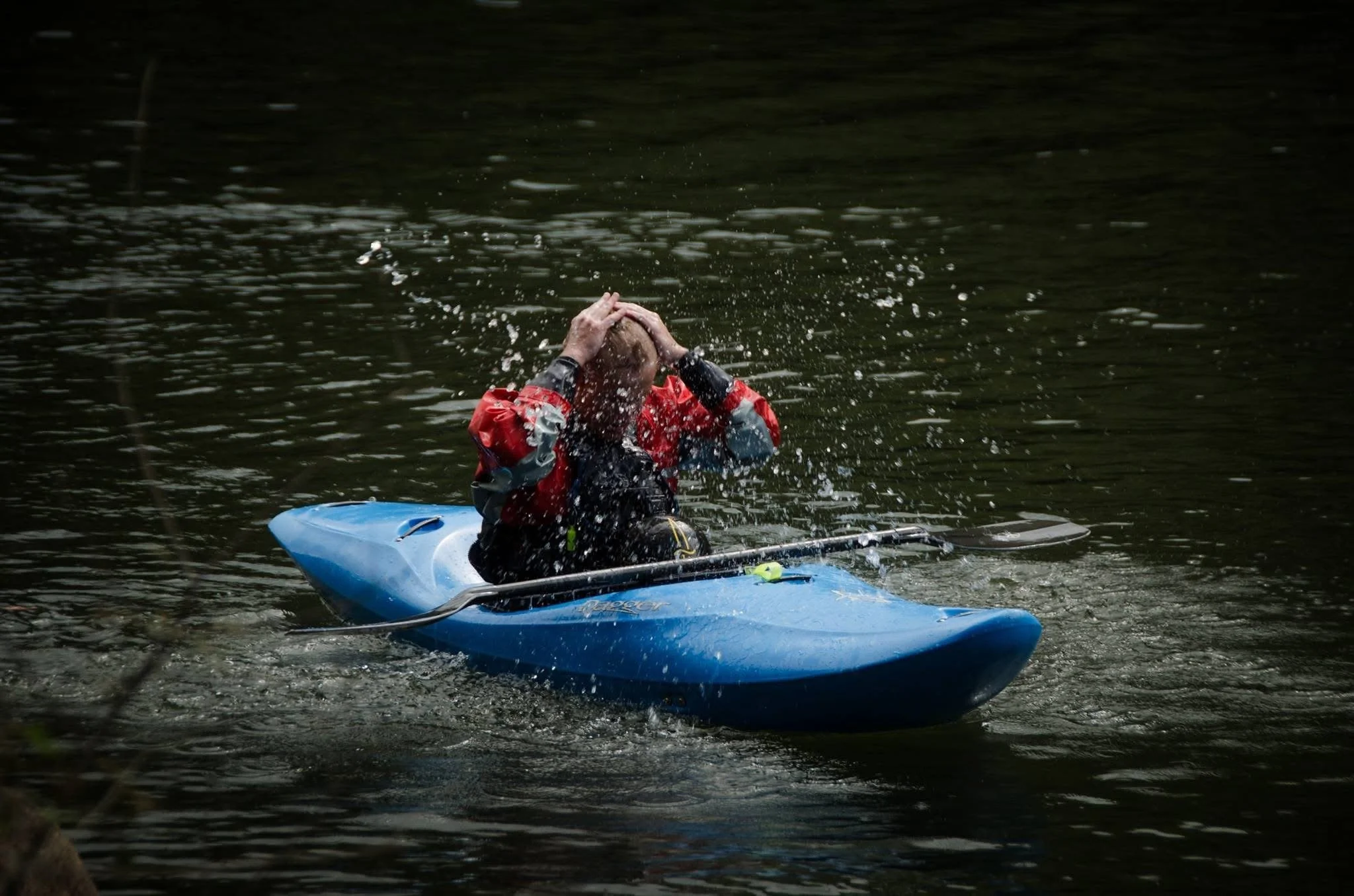
Photo Credit: Sarah Ruhlen
What I didn’t understand then is that when one identity collapses, something else often rushes in to take its place. Sometimes it’s achievement again, reshaped. Sometimes it’s numbness. And sometimes it can be loss itself.
Loss can become an identity.
I’ve seen it in myself and in others. I’m the injured one. I’m the person who lost someone. I’m the one who went through the storm. At first, this can feel stabilizing. Loss explains the pain. It earns compassion. It gives shape to what otherwise can feel chaotic. But over time, if we’re not careful, grief can harden into another singular story… another sandbar mistaken for bedrock.
This matters deeply to me, and it matters to the work we’re doing at Bright Shadow.
People often arrive at Bright Shadow because of a specific loss: a friend, business or a river as they once knew it. And that loss is real. It deserves space, honesty, and respect. But what often rises beneath it is something broader and more complex - identity shifts, unprocessed transitions, old wounds that were never given language, parts of the self that were deferred in the name of performance, productivity, or survival.
Our work is not about fixing people. It’s not about centering loss as the defining feature of anyone’s life. And it’s not about pulling people into darkness for the sake of growth, community, or an organization’s momentum.
We try (intentionally and imperfectly) to hold both light and shadow.
To honor grief without letting it become an identity. To create space without trapping anyone inside it. To move slowly enough so that the nervous system can settle, and honestly enough that something real can surface.
Identity, I’ve come to believe, is not something we arrive at or protect at all costs. It’s something that breathes and evolves, changing shape as life does. And when we allow that fluidity and widen instead of harden, we give ourselves a chance to remain whole.
If you’re in a season where who you were no longer fits, and who you’re becoming isn’t clear yet, there is nothing wrong with you. You’re not broken. You’re not behind. You’re not failing.
You’re in motion.
And when motion is met with care, perspective, and community, it doesn’t have to pull us under. It can carry us - slowly, steadily - forward.
Chris
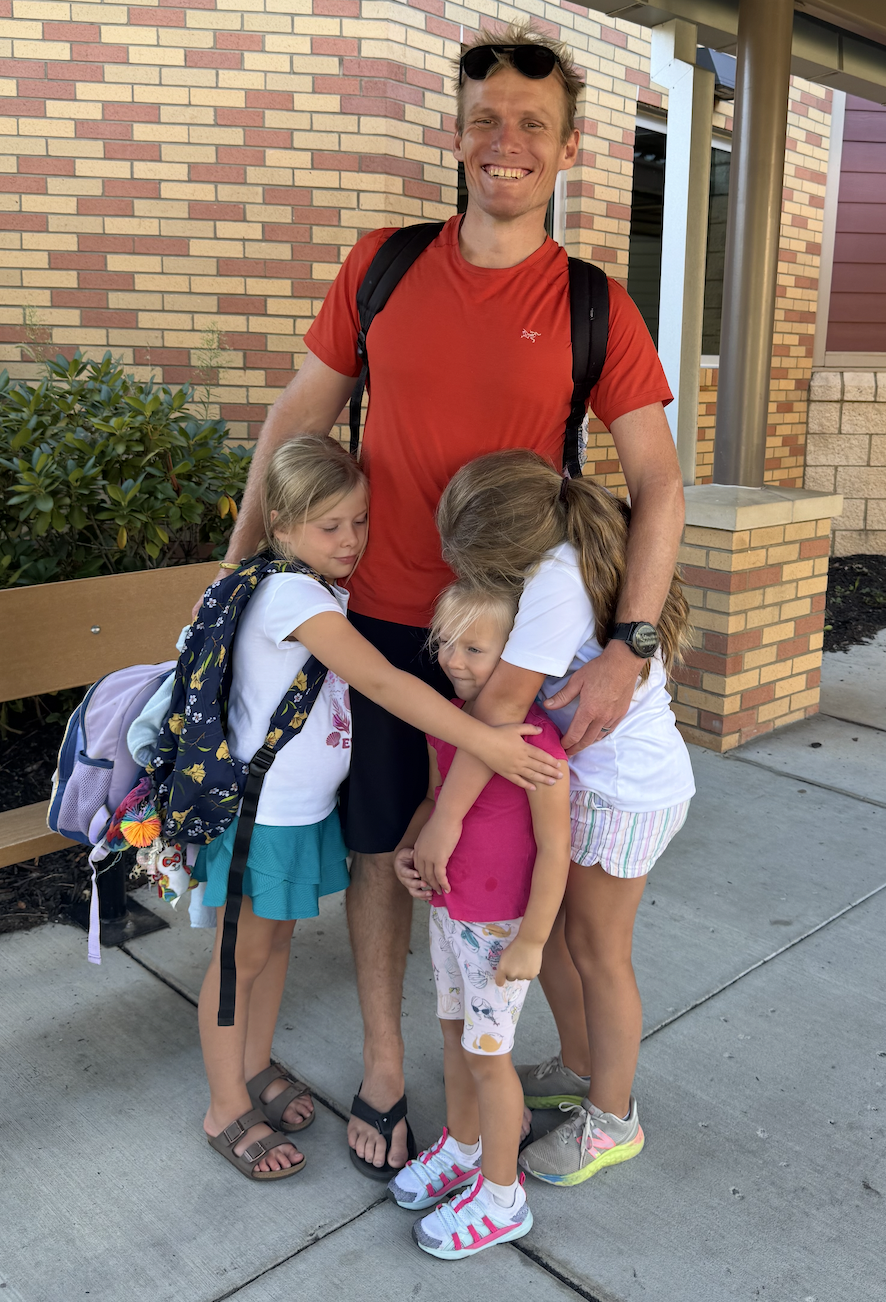
The author enjoying three little expansions of identity after a kayak expedition in northern Canada.
(Footnotes)
*Thank you Brad Taylor for that conversation at Outdoor Retailer in 2014.
